
Exploring the landscape of finance tools tailored for small businesses in 2025 unveils a realm of innovation and efficiency. From traditional methods to cutting-edge technologies, the evolution of financial management tools is set to revolutionize how businesses handle their finances.
Delving deeper into the realm of finance tools exposes a myriad of possibilities and opportunities for small businesses looking to streamline their operations and make informed decisions.
Importance of Finance Tools
Finance tools play a crucial role in the success of small businesses by providing essential support for financial management. These tools offer a wide range of benefits that help businesses streamline their operations, make informed decisions, and achieve long-term growth.
Key Benefits of Using Finance Tools
- Tracking Expenses: Finance tools allow small businesses to accurately track their expenses, identify cost-saving opportunities, and maintain a healthy cash flow.
- Budgeting and Forecasting: With finance tools, businesses can create budgets, forecast financial performance, and set achievable financial goals for the future.
- Invoicing and Payment Management: These tools simplify the invoicing process, track payments, and help businesses maintain a steady inflow of revenue.
- Financial Reporting: Finance tools generate detailed financial reports that provide insights into the company's financial health, enabling better decision-making.
How Finance Tools Improve Decision-Making Processes
Finance tools provide small businesses with accurate and real-time financial data, enabling them to make informed decisions based on data-driven insights. By having access to up-to-date financial information, businesses can evaluate performance, identify trends, and adjust strategies to optimize profitability.
Emerging Finance Tools
In 2025, small businesses will have access to a variety of advanced finance tools that leverage AI and machine learning to streamline financial processes and improve decision-making.AI and machine learning technologies are revolutionizing finance tools for small businesses by automating tasks, providing real-time insights, and enhancing accuracy in financial analysis.
These tools can forecast cash flow, detect anomalies, and even suggest optimized financial strategies based on patterns and trends.
Top Finance Tools Expected in 2025
- AI-powered Financial Management Platforms: These platforms offer comprehensive financial insights, automate bookkeeping tasks, and provide personalized recommendations for better financial management.
- Blockchain-based Payment Solutions: Secure and transparent payment solutions utilizing blockchain technology will enable faster transactions and reduce transaction costs for small businesses.
- Predictive Analytics Tools: By utilizing predictive analytics, small businesses can forecast financial trends, identify risks, and make informed decisions to optimize their financial performance.
- Automated Expense Management Systems: These systems use AI to categorize expenses, track receipts, and streamline the reimbursement process, saving time and reducing errors.
Comparison between Traditional and Technological Finance Tools
| Traditional Finance Tools | Latest Technological Advancements |
|---|---|
| Manual data entry and analysis | Automated data processing and real-time analytics |
| Basic financial reporting | Advanced predictive analytics and personalized insights |
| Time-consuming reconciliation processes | Instant reconciliation and fraud detection capabilities |
| Limited scalability and flexibility | Scalable cloud-based solutions with customizable features |
Integration and Compatibility
Integrating finance tools with existing systems is crucial for small businesses to streamline their financial processes and improve overall efficiency. By ensuring compatibility between various finance tools, businesses can achieve optimal performance and maximize the benefits of these tools.
Seamless Integration with Business Software
Finance tools can be seamlessly integrated with other business software to enhance collaboration and data sharing across different departments. For example, accounting software can be integrated with inventory management systems to automatically update financial records based on inventory changes.
- Integrating finance tools with customer relationship management (CRM) software can provide insights into customer payment histories and help in forecasting cash flow.
- Connecting payroll software with accounting tools can streamline the process of recording payroll expenses and ensure accurate financial reporting.
- Integrating budgeting and forecasting tools with financial reporting software can help businesses make informed decisions based on real-time data and projections.
Ensuring Compatibility for Optimal Performance
To ensure compatibility between various finance tools, small businesses can follow these tips:
- Choose finance tools that offer integration capabilities with commonly used business software.
- Regularly update software to ensure compatibility with the latest versions and features.
- Test the integration of finance tools with existing systems before full implementation to identify any potential issues.
- Seek assistance from software providers or IT professionals to troubleshoot compatibility issues and optimize performance.
Security and Compliance
Data security is a critical aspect when it comes to finance tools for small businesses. These tools handle sensitive financial information that must be protected from cyber threats and breaches. Ensuring the security of data is essential for maintaining the trust of clients and safeguarding the financial health of the business.
Importance of Data Security
One of the primary reasons why data security is crucial in finance tools for small businesses is to prevent unauthorized access to sensitive financial information. This includes customer data, payment details, and other confidential information that, if compromised, could lead to financial loss and reputational damage.
By implementing robust security measures, such as encryption, multi-factor authentication, and regular security audits, small businesses can protect their data from cyber threats and ensure compliance with data protection regulations.
Compliance with Financial Regulations
Finance tools can also help small businesses comply with financial regulations by automating compliance processes and providing real-time insights into financial transactions. This ensures that businesses are adhering to regulatory requirements and avoiding penalties or legal issues.
Features such as compliance monitoring, audit trails, and regulatory reporting can help small businesses stay compliant with laws such as GDPR, PCI DSS, and other financial regulations specific to their industry.
Ensuring Data Privacy and Security Strategy
- Implementing encryption protocols to secure sensitive data both at rest and in transit.
- Regularly updating finance tools to patch security vulnerabilities and protect against emerging threats.
- Training employees on data security best practices and protocols to prevent data breaches.
- Conducting regular security audits and penetration testing to identify and address potential security weaknesses.
- Establishing access controls and permissions to limit access to sensitive financial information only to authorized personnel.
Final Summary
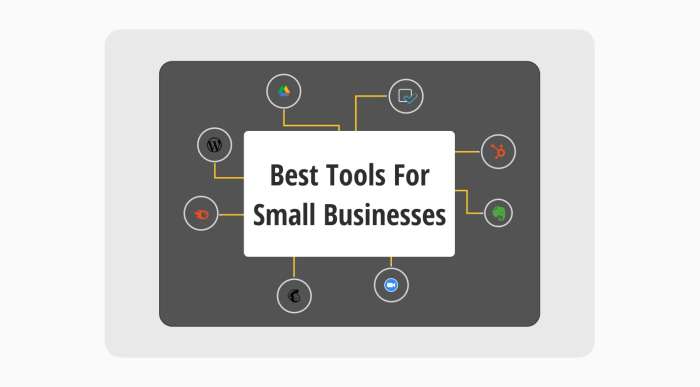
In conclusion, the future of finance tools for small businesses in 2025 holds immense promise. By leveraging the right tools and technologies, businesses can navigate the complexities of financial management with confidence and foresight. Stay ahead of the curve and embrace the tools that will shape the financial landscape of tomorrow.
FAQ Insights
How can finance tools benefit small businesses?
Finance tools play a crucial role in helping small businesses manage their finances efficiently, improve decision-making processes, and ensure financial stability.
Which finance tools are expected to gain popularity in 2025?
In 2025, AI-powered tools and advanced analytics platforms are expected to dominate the finance tools landscape for small businesses.
Why is data security important in finance tools?
Data security is vital to protect sensitive financial information and prevent unauthorized access, safeguarding the financial health of small businesses.