
Embark on a journey of financial planning for your business with this comprehensive guide. Dive into the intricacies of creating a solid financial foundation that can pave the way for success and growth.
Explore the key elements of financial planning, from assessing your current financial situation to setting SMART goals and managing risks effectively.
Importance of Financial Planning for Businesses
Financial planning is a critical aspect of running a successful business. It involves setting goals, forecasting future financial needs, and developing strategies to achieve those goals.
Benefits of Financial Planning
- Provides a roadmap for the future: A well-thought-out financial plan helps businesses anticipate challenges and opportunities, allowing them to make informed decisions.
- Optimizes resources: By having a clear financial plan in place, businesses can allocate resources efficiently and effectively, maximizing their potential for growth.
- Enhances decision-making: Financial planning enables businesses to analyze various scenarios and make decisions based on data and projections, rather than relying on guesswork.
- Facilitates goal setting: Setting specific financial goals and creating a plan to achieve them gives businesses a sense of direction and purpose, motivating employees and stakeholders.
Assessing Current Financial Situation
Before creating a financial plan for your business, it is crucial to assess the current financial status. This step involves evaluating key financial metrics to gain a clear understanding of your business's financial health.
Steps to Evaluate Current Financial Status:
- Review Financial Statements: Analyze your balance sheet, income statement, and cash flow statement to assess revenues, expenses, assets, and liabilities.
- Calculate Cash Flow: Understand the inflow and outflow of cash to determine if your business is generating enough cash to cover expenses.
- Assess Profit Margins: Calculate gross profit margin and net profit margin to gauge the profitability of your business operations.
- Examine Expenses: Break down your expenses to identify areas where you can cut costs and improve efficiency.
Key Financial Metrics to Consider:
| Cash Flow | Ensures there is enough cash to cover operating expenses and invest in growth. |
| Profit Margins | Indicates the percentage of revenue that translates into profit after accounting for costs. |
| Expenses | Understanding and controlling expenses is essential for maintaining profitability. |
Understanding these key financial metrics is vital for effective financial planning. By assessing your current financial situation, you can make informed decisions to improve your business's financial health and achieve long-term success.
Setting Financial Goals
Setting financial goals is a crucial step in creating a solid financial plan for your business. By following the SMART criteria
- specific, measurable, achievable, relevant, and time-bound
- you can ensure that your goals are clear and attainable.
Examples of Short-Term and Long-Term Financial Goals
- Short-Term Financial Goals:
- Increase monthly revenue by 15% within the next six months.
- Reduce operating expenses by 10% in the next quarter.
- Build an emergency fund equivalent to three months' worth of expenses by the end of the year.
- Long-Term Financial Goals:
- Expand to new markets and increase market share by 20% within the next three years.
- Acquire a competitor within the next five years to strengthen market position.
- Establish a retirement fund for key employees within the next decade.
Aligning Financial Goals with Business Strategy
Setting financial goals that align with your overall business strategy is essential for achieving success. When your financial goals are in sync with your business objectives, you can ensure that resources are allocated effectively and that every financial decision contributes to the growth and sustainability of your business.
Budgeting and Forecasting
Budgeting and forecasting are crucial components of financial planning for businesses. Budgeting helps in setting financial goals and managing expenses effectively, while forecasting enables businesses to anticipate future financial needs and opportunities.
Importance of Budgeting
Budgeting plays a vital role in financial planning as it helps businesses allocate resources efficiently, control expenses, and track financial performance. Here are the steps to create a comprehensive budget for a business:
- Estimate Revenue: Start by forecasting the expected revenue for the upcoming period based on historical data and market trends.
- Identify Expenses: List all the expenses, including fixed costs (rent, salaries) and variable costs (utilities, raw materials).
- Create a Budget: Develop a detailed budget by aligning revenue and expenses, ensuring that it is realistic and achievable.
- Monitor and Adjust: Regularly monitor the actual financial performance against the budget and make necessary adjustments to stay on track.
Significance of Financial Forecasting
Financial forecasting involves predicting future financial outcomes based on historical data and trends. It helps businesses in planning for growth, identifying potential risks, and seizing opportunities. By forecasting financial needs and revenues, businesses can make informed decisions and adapt to changing market conditions.
Managing Risks and Contingencies
Managing risks and contingencies is crucial for the financial stability of a business. By identifying potential financial risks and having strategies in place to mitigate them, a business can navigate unexpected challenges effectively
Identifying Potential Financial Risks
It is important for businesses to identify potential financial risks they may face. These risks can include economic downturns, changes in market conditions, unexpected expenses, or even natural disasters. By understanding these risks, businesses can be better prepared to handle them.
Mitigating Financial Risks through Contingency Planning
- Create a contingency fund: Setting aside a portion of profits into a contingency fund can help businesses cover unexpected expenses without impacting their operations or financial stability.
- Diversify income streams: Relying on a single source of income can make a business vulnerable to financial risks. Diversifying income streams can help mitigate these risks.
- Develop a risk management strategy: By assessing potential risks and developing a plan to address them, businesses can proactively manage financial challenges.
Role of Insurance and Emergency Funds
Insurance and emergency funds play a vital role in managing unexpected financial challenges:
- Insurance: Having appropriate insurance coverage can help businesses protect against various risks, including property damage, liability claims, or business interruption.
- Emergency funds: Maintaining an emergency fund can provide businesses with a financial cushion during times of crisis, such as a sudden drop in revenue or unexpected expenses.
Investment Strategies
Investment strategies play a crucial role in the financial success of a business. By making wise investment decisions, businesses can not only grow but also ensure stability in the long run.
Different Investment Options
- Stocks: Investing in stocks of publicly traded companies.
- Bonds: Purchasing bonds issued by governments or corporations.
- Mutual Funds: Pooling money with other investors to invest in a diversified portfolio.
- Real Estate: Investing in properties for rental income or capital appreciation.
Factors to Consider When Choosing Investment Opportunities
- Risk Tolerance: Assessing how much risk the business is willing to take.
- Time Horizon: Determining the length of time the business can invest the funds.
- Return on Investment: Evaluating the potential returns from the investment.
- Market Conditions: Considering the current economic and market trends.
Contribution to Financial Growth and Stability
Investment strategies can significantly impact the financial growth and stability of a business. By choosing the right investment options, businesses can generate additional income, build wealth, and create a buffer against economic downturns. Moreover, strategic investments can help diversify the business's revenue streams and mitigate risks associated with fluctuations in the market.
Monitoring and Adjusting the Financial Plan
Regularly monitoring and adjusting your financial plan is crucial for the success of your business. By keeping a close eye on your financial performance and making necessary adjustments, you can ensure that your business stays on track to meet its goals and objectives.
Key Performance Indicators (KPIs) in Financial Planning
- Revenue Growth Rate: Monitor the rate at which your business is growing its revenue over time.
- Profit Margin: Keep track of your profit margin to ensure that your business is generating enough profit.
- Cash Flow: Monitor your cash flow to ensure that your business has enough liquidity to meet its financial obligations.
- Debt-to-Equity Ratio: Keep an eye on this ratio to assess your business's financial leverage.
- Return on Investment (ROI): Measure the return on investment to assess the profitability of your business initiatives.
Making Adjustments to the Financial Plan
Regularly review your financial performance against the plan and identify any gaps or areas for improvement. If you notice that your business is not meeting its financial goals, consider making adjustments to the plan. This could involve cutting costs, increasing revenue streams, or revising your investment strategies to better align with your business objectives.
Ultimate Conclusion
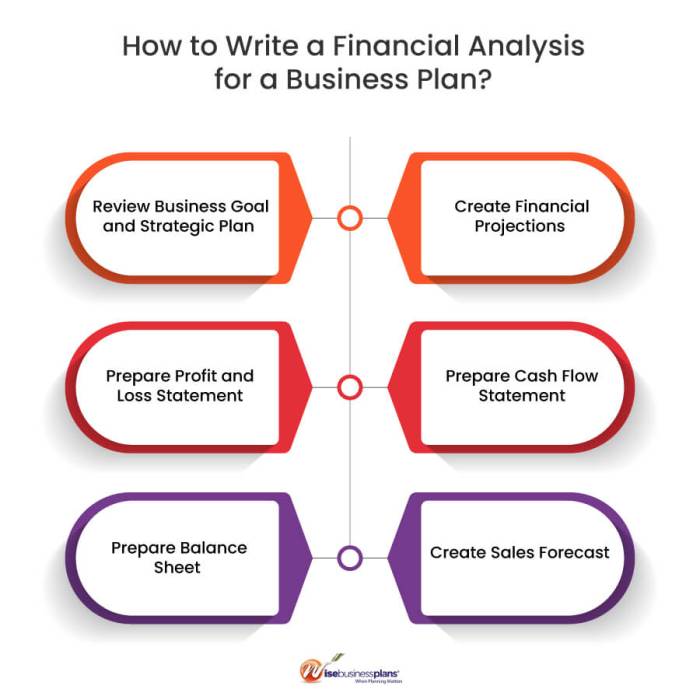
In conclusion, crafting a financial plan tailored to your business's needs is a vital step towards achieving sustainable growth and resilience in today's competitive landscape. By following the steps Artikeld in this guide, you can steer your business towards financial success and stability.
Common Queries
What are the benefits of having a well-thought-out financial plan?
Having a well-thought-out financial plan provides clarity, direction, and a roadmap for achieving financial goals. It helps in making informed decisions and preparing for unforeseen circumstances.
How can financial planning help in decision-making for a business?
Financial planning provides a structured approach to evaluating financial implications of business decisions. It helps in prioritizing investments, managing resources efficiently, and assessing risks.
Why is it important to align financial goals with the overall business strategy?
Aligning financial goals with the overall business strategy ensures coherence and synergy in efforts towards growth. It helps in focusing resources on strategic priorities and maximizing the impact of financial decisions.
What are some key performance indicators (KPIs) to track in financial planning?
Key performance indicators like revenue growth, profit margins, cash flow ratios, and return on investment are crucial to monitor financial health and progress towards goals.