Starting off with Dropshipping vs. Ecommerce: Which is More Profitable?, this article aims to delve into the comparison between these two business models, shedding light on their profitability aspects.
The subsequent paragraphs will explore the costs, operational aspects, marketing strategies, customer experience, and growth potential of both dropshipping and traditional ecommerce, providing a comprehensive analysis for readers.
Introduction
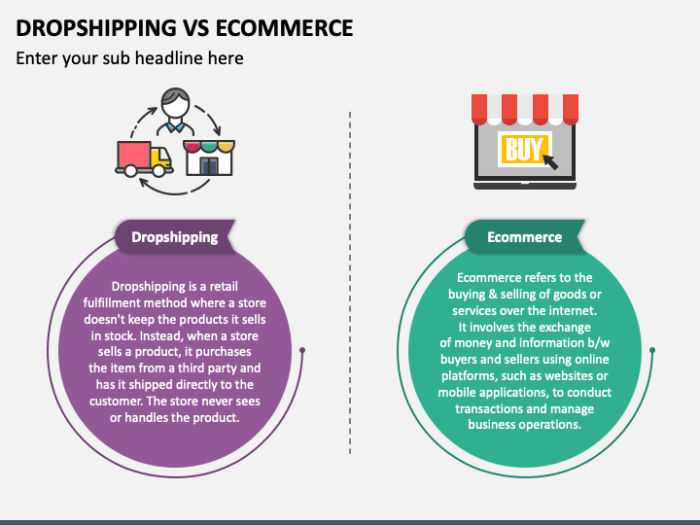
Dropshipping and ecommerce are two popular business models in the online retail industry. Dropshipping involves selling products without holding inventory, as the supplier ships the products directly to the customers. On the other hand, traditional ecommerce involves purchasing and stocking inventory before selling it to customers.The concept of profitability in business refers to the ability of a company to generate revenue that exceeds its expenses.
Profitability is essential for the long-term sustainability and growth of a business.One of the key differences between dropshipping and traditional ecommerce models is the upfront investment required. Dropshipping typically requires lower upfront costs as there is no need to purchase and store inventory.
In contrast, traditional ecommerce models involve buying inventory in bulk, which can tie up a significant amount of capital.
Cost Analysis
When comparing dropshipping to traditional ecommerce, it is essential to consider the cost analysis involved in both business models. Let's explore the initial setup costs, ongoing expenses, and potential profit margins for each.
Initial Setup Costs
- Dropshipping: One of the significant advantages of dropshipping is the low initial investment required. Retailers do not need to purchase inventory upfront, reducing the financial risk. However, there may be expenses related to setting up an online store, domain registration, and marketing.
- Traditional Ecommerce: Traditional ecommerce businesses typically involve higher initial setup costs as retailers need to invest in inventory, storage space, and shipping infrastructure. This can be a significant financial commitment upfront.
Ongoing Expenses
- Dropshipping: Ongoing expenses in dropshipping mainly revolve around marketing, website maintenance, and customer service. Since retailers do not hold inventory, they do not incur costs associated with warehousing, inventory management, or fulfillment.
- Traditional Ecommerce: In traditional ecommerce, ongoing expenses include inventory management, storage costs, shipping fees, and order fulfillment. Retailers need to account for these expenses regularly, impacting their profit margins.
Potential Profit Margins
- Dropshipping: While dropshipping offers lower barriers to entry and reduced upfront costs, the profit margins may be slimmer due to competition and the need to mark up prices to cover supplier costs. Retailers need to focus on high sales volume to increase profitability.
- Traditional Ecommerce: Traditional ecommerce businesses have the potential for higher profit margins as retailers have more control over pricing and can negotiate better deals with suppliers. However, the initial investment and ongoing expenses may impact overall profitability.
Operational Aspects
When it comes to the operational aspects of dropshipping and traditional ecommerce, there are key differences in logistics, fulfillment processes, and the overall time and effort required to run a successful business.
Logistics Involved in Dropshipping
Dropshipping involves a unique logistics model where the retailer does not keep the products in stock. Instead, when a customer places an order, the retailer purchases the item from a third party and has it shipped directly to the customer.
This means that the retailer does not have to deal with inventory management, storage, or shipping logistics. However, it also means relying heavily on suppliers and third-party fulfillment services.
Fulfillment Process in Traditional Ecommerce
In traditional ecommerce, the retailer purchases and maintains inventory, handles storage, and manages the fulfillment process in-house or through a third-party logistics provider. This involves more control over inventory management and shipping but also requires more investment in storage space and infrastructure.
Comparison of Time and Effort
Running a successful dropshipping business typically requires less time and effort compared to a traditional ecommerce store. With dropshipping, the focus is more on marketing and customer service, as opposed to inventory management and fulfillment. However, the trade-off is less control over product quality, shipping times, and potential supplier issues.
On the other hand, traditional ecommerce stores require more time and effort to manage inventory, fulfill orders, and handle logistics, but offer more control over the entire process.
Marketing Strategies
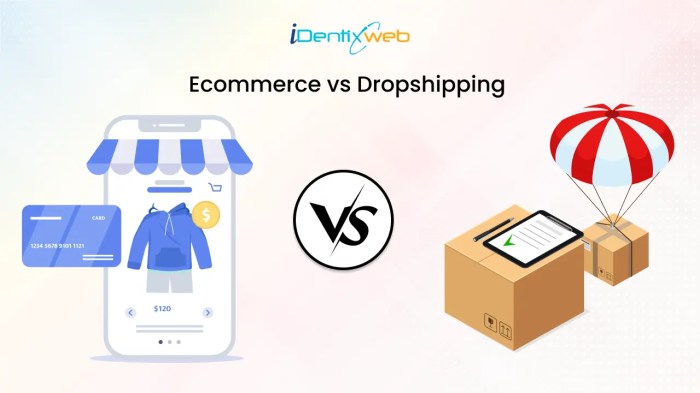
Effective marketing strategies play a crucial role in the success of both dropshipping businesses and traditional ecommerce. Let's explore some key differences and similarities in marketing approaches between the two models.
Dropshipping Marketing Strategies
- Utilize Social Media Advertising: Platforms like Facebook, Instagram, and Pinterest are ideal for targeting specific audiences and driving traffic to your dropshipping store.
- Search Engine Optimization (): Optimize your website content with relevant s to improve your search engine rankings and attract organic traffic.
- Influencer Partnerships: Collaborate with influencers in your niche to promote your products and reach a larger audience through authentic recommendations.
Importance of Branding in Traditional Ecommerce
- Build Trust and Credibility: Establishing a strong brand identity helps differentiate your business from competitors and build trust with customers.
- Create Repeat Customers: Brand loyalty is a powerful driver of repeat purchases, as customers are more likely to choose familiar brands they trust.
- Brand Awareness: Consistent branding across all marketing channels helps increase brand recognition and attract new customers.
Customer Acquisition Costs Comparison
- Dropshipping: Typically, dropshipping businesses have lower customer acquisition costs due to the lower initial investment required for inventory and fulfillment. However, competition can drive up advertising costs.
- Traditional Ecommerce: While traditional ecommerce businesses may have higher upfront costs for inventory and storage, establishing a strong brand can lead to lower customer acquisition costs over time through repeat purchases and referrals.
Customer Experience
When it comes to customer experience, both dropshipping and traditional ecommerce have unique challenges and advantages. Let's explore how product quality, shipping times, and customer service play a crucial role in shaping the overall customer experience.
Impact of Product Quality and Shipping Times in Dropshipping
In dropshipping, product quality and shipping times are often major concerns for customers. Since the seller doesn't handle the inventory directly, there may be issues with product quality control. Additionally, shipping times can be longer due to the reliance on third-party suppliers.
This can lead to customer dissatisfaction and negative reviews if not managed effectively.
Role of Customer Service in Traditional Ecommerce
Traditional ecommerce businesses have the advantage of controlling product quality and shipping times more directly. However, customer service plays a vital role in maintaining customer loyalty. Prompt responses to queries, efficient handling of returns or refunds, and personalized interactions can all contribute to a positive customer experience and repeat purchases.
Comparison of Overall Customer Experience
In comparing the overall customer experience between dropshipping and traditional ecommerce, it's important to consider the trade-offs. Dropshipping may offer a wider range of products and lower upfront costs, but it can also result in longer shipping times and potential quality issues.
On the other hand, traditional ecommerce businesses have more control over product quality and shipping times but may require more investment in inventory and fulfillment.Overall, both models have their strengths and weaknesses when it comes to customer experience. It ultimately depends on the specific business model, target market, and operational capabilities to determine which approach is more suitable for maximizing customer satisfaction and loyalty.
Scalability and Growth Potential
When considering the scalability and growth potential of dropshipping versus traditional ecommerce, it is essential to analyze how each business model can adapt to changing market conditions and expand over time.
Scalability of Dropshipping Businesses
Dropshipping businesses are known for their high scalability due to the low initial investment required. Since dropshippers do not hold inventory or manage logistics, they can easily add new products to their online store without worrying about storage or shipping constraints.
This flexibility allows dropshipping businesses to quickly scale up their operations and reach a broader customer base.
Potential for Expansion in Traditional Ecommerce Models
On the other hand, traditional ecommerce models involve holding inventory, managing warehouses, and handling shipping logistics. While this can be more complex and costly compared to dropshipping, it also offers more control over the entire supply chain. Traditional ecommerce businesses can expand by investing in inventory, optimizing their logistics processes, and establishing a strong brand presence.
Long-term Viability and Growth Potential
In terms of long-term viability and growth potential, both dropshipping and traditional ecommerce have their advantages. Dropshipping allows for rapid expansion with minimal upfront costs, making it an attractive option for entrepreneurs looking to test new markets or product ideas.
However, traditional ecommerce models offer more control over the customer experience, product quality, and branding, which can lead to sustained growth and customer loyalty over time.Overall, the scalability of dropshipping businesses makes them well-suited for rapid growth and market testing, while traditional ecommerce models provide a foundation for long-term success and brand building.
The key is to choose the business model that aligns with your goals, resources, and growth strategy to maximize profitability and sustainability in the ecommerce industry.
Final Wrap-Up
In conclusion, the discussion on Dropshipping vs. Ecommerce: Which is More Profitable? highlights the nuances of each model, offering insights into their profitability and growth prospects. Whether you're considering venturing into dropshipping or traditional ecommerce, this article equips you with valuable information to make an informed decision.
Clarifying Questions
Is dropshipping more cost-effective than traditional ecommerce?
Dropshipping usually involves lower upfront costs compared to traditional ecommerce, as you don't need to manage inventory or handle shipping logistics.
What are some effective marketing strategies for dropshipping businesses?
Some effective marketing strategies for dropshipping include influencer collaborations, social media advertising, and search engine optimization to drive traffic and sales.
How does customer experience differ between dropshipping and traditional ecommerce?
In dropshipping, product quality and shipping times directly impact customer satisfaction, whereas traditional ecommerce focuses on branding and customer service for loyalty.